 Artblocks
 Curated presents generative NFT collections shaped by artists' algorithms
Artblocks Curated is the flagship generative NFT series whose release program concluded in 2025. Its artists use algorithms to create related, distinct artworks. Each collection expresses an artistic system through individual tokens, with programmed rules governing variation. Exploring it means considering both the range of the collection and the particular work that a token generates.
Buying an existing token and minting a new one lead to different viewing decisions. The former lets someone choose an already generated work; the latter introduces the uncertainty that the artist built into the collection.
The artist's system across a collection
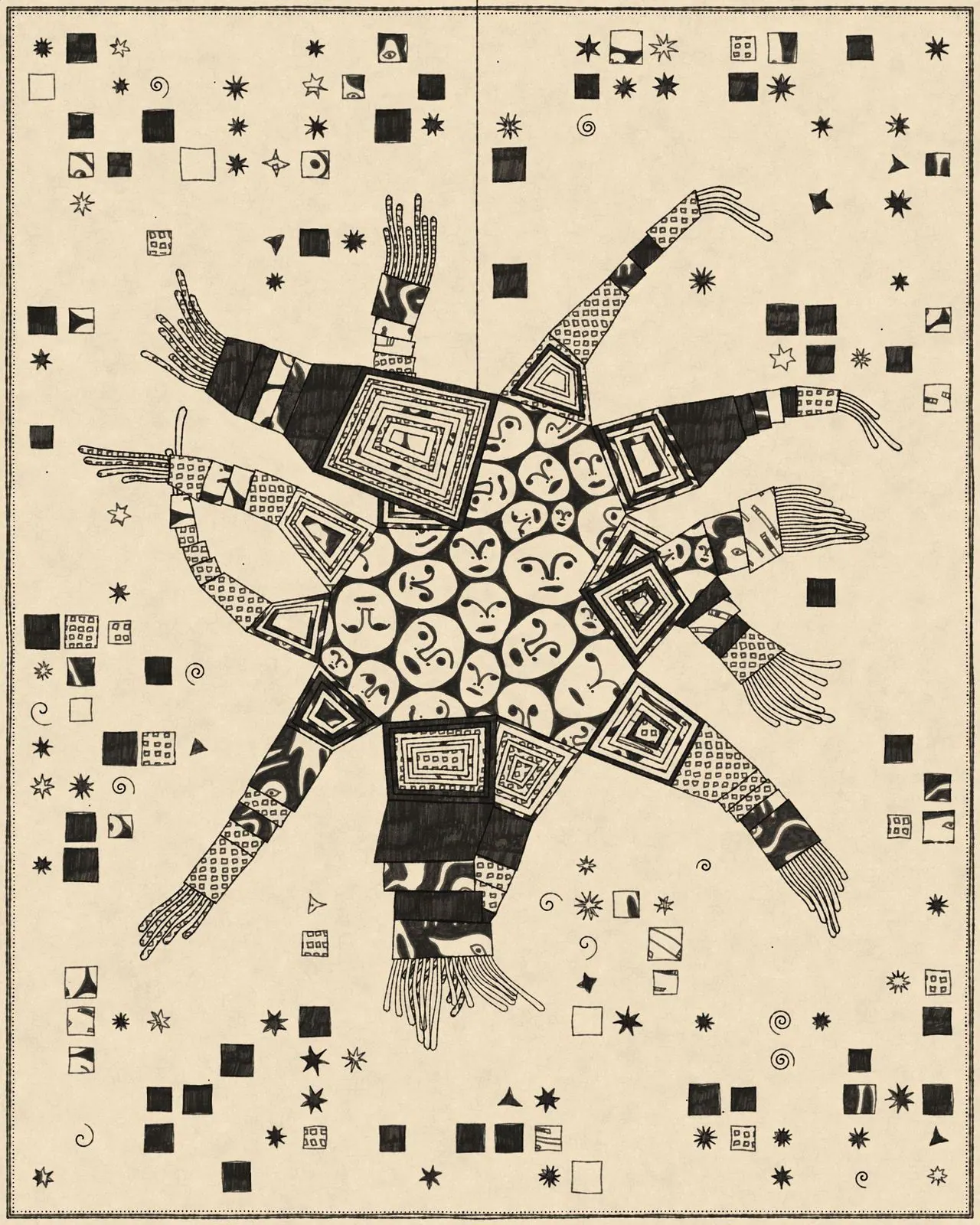
A Curated project such as Cargo by Kim Asendorf presents the artist's generative system through individual works with shared rules and variable characteristics. The artist determines which relationships remain consistent across outputs. Programmed randomness explores possibilities within those constraints, giving each token a particular realization of the project. Color palettes, scale and positioning are examples of dimensions that an artist can control.
A collection's character emerges from the interaction between recurring structure and differences among its outputs. Exploring several works can reveal whether an appealing feature belongs to the general system or one particular output. The piece that someone prefers need not represent the collection's entire range. Curated identifies the publishing selection, while the individual work remains a separate artistic choice.
How does a token hash shape a Curated artwork?
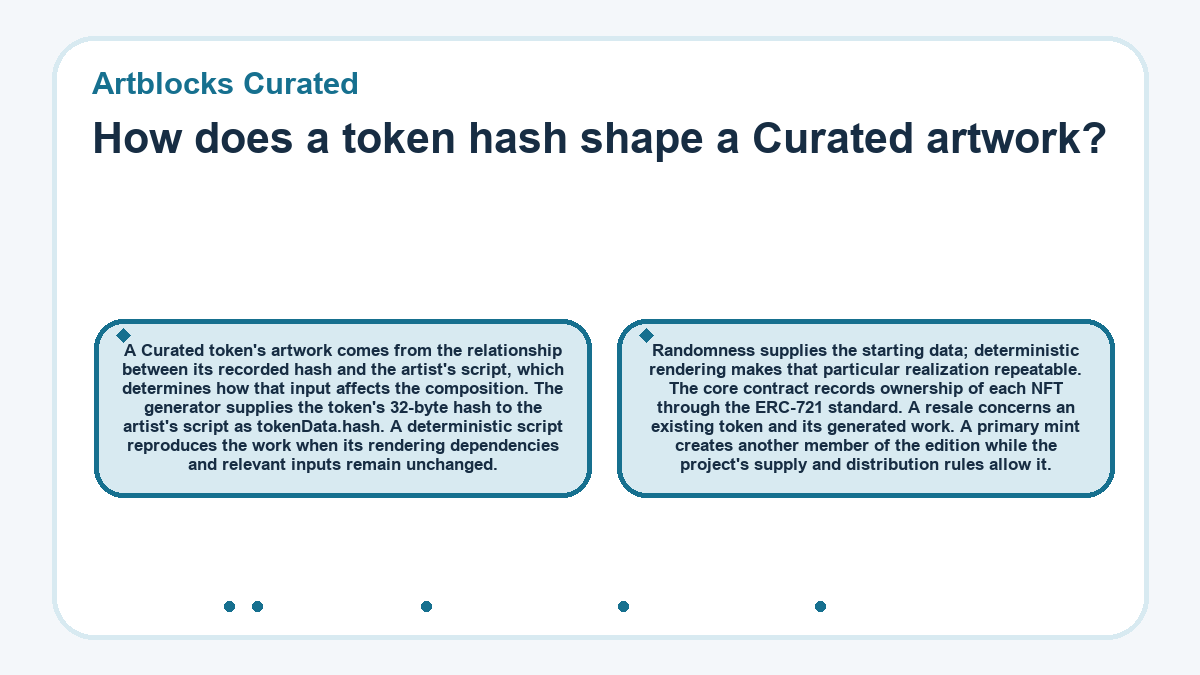
A Curated token's artwork comes from the relationship between its recorded hash and the artist's script, which determines how that input affects the composition.
The generator supplies the token's 32-byte hash to the artist's script as
tokenData.hash
.
A deterministic script reproduces the work when its rendering dependencies and relevant inputs remain unchanged. Randomness supplies the starting data; deterministic rendering makes that particular realization repeatable.
The core contract records ownership of each NFT through the ERC-721 standard. A resale concerns an existing token and its generated work. A primary mint creates another member of the edition while the project's supply and distribution rules allow it.
Curated, Studio and the historical program labels
Curated and Studio distinguish publishing approaches within the same generative-art platform, so the collection's category matters when exploring an artist's wider output. Art Blocks' Curation Board selected Curated projects for innovation, technical rigor and aesthetic quality. Studio gives generative artists a self-publishing route for their collections. Shared rendering technology does not turn a Studio release into a Curated project. A collection's own label identifies the publishing program that it belongs to.
Presents operated from November 2022 to January 2024. Factory and Playground ended their active release periods in October 2022. Quine by Larva Labs was the final Curated release in 2025. Curated collections belong to Art Blocks 500, the completed set of flagship projects published from 2020 to 2025. Existing artworks can retain those labels when they appear alongside Curated collections in the catalog.
The artwork beyond a static preview
A Curated artwork's live presentation matters when its artist uses motion, interaction or sound that a static preview cannot fully convey. The wider platform supports these forms alongside static compositions. An animated work introduces time into the composition. An interactive piece also introduces the viewer's input. The artist's implementation determines which of these elements a particular collection includes.
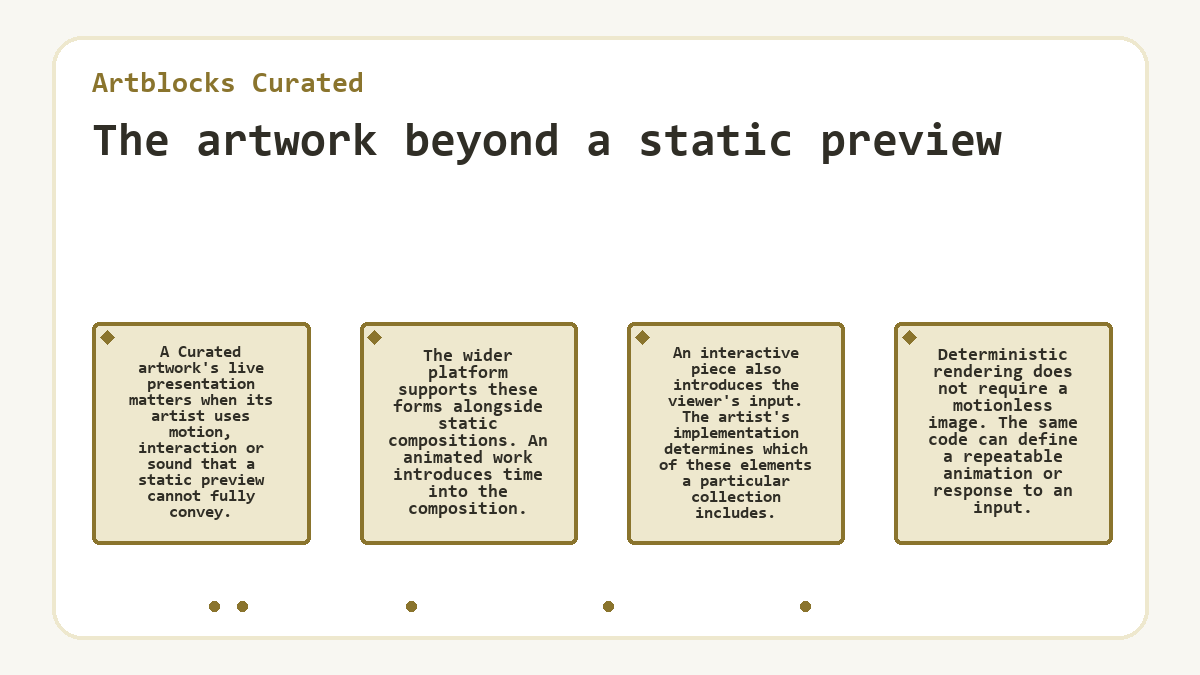
Deterministic rendering does not require a motionless image. The same code can define a repeatable animation or response to an input.
Can Curated artworks be viewed beyond the platform?
Curated artworks with complete on-chain rendering ingredients can be reconstructed without the platform's viewing interface, using a compatible browser and access to Ethereum. The on-chain generator assembles the artist's script, token data and required libraries into browser-viewable HTML. This arrangement removes reliance on a centralized service to assemble the viewing document for compatible works.
On 9 September 2026, Art Blocks announced that its Art Blocks 500 permanent collection had full on-chain-generator compatibility. That completion announcement covers the defined permanent collection. Other projects retain their own dependency configurations, so a program label alone does not establish complete on-chain preservation.
The dependency registry stores p5.js v1.0.0 and Three.js v0.124.0 fully on-chain. Other approved versions may reference CDN packages with recorded release hashes. A registry entry therefore does not always mean that every required library resides on Ethereum. Outside that permanent collection, each project's dependency configuration determines whether external requirements remain.
Software art also depends on its viewing environment. Retaining code and inputs addresses a different preservation problem from maintaining browser compatibility. Reconstruction requires the project's actual dependencies. Keeping the required library version matters because the generator loads the version configured for that project.
Collection choice and the cost of a primary mint
For a Curated release using the ETH fixed-price minter, purchase readiness includes both the artwork price and Ethereum transaction costs. Assume that the sale is active and supply remains. The listed price covers the artwork; network activity and transaction execution determine the separate gas expenditure.
- Match the collection and artist to the intended Curated project.
- Compare existing outputs with the kind of composition you want to collect.
- Confirm that the primary sale is active and supply remains.
- Hold enough ETH for the artwork price and the estimated network cost.
- Distinguish a submitted purchase from the mint recorded by the token contract.
With those prerequisites satisfied, a successful purchase mints the artwork and records token ownership. Other purchases can exhaust the remaining supply before confirmation. A purchase that then reverts does not create the expected NFT, although it can consume gas.
Still wondering about Artblocks Curated?
-
Does every Curated collection use the same purchase price?
- A Curated designation does not set a common purchase price across collections. Each release has its own price and distribution terms. Fixed-price sales and auctions use different pricing mechanisms. For an existing token offered for resale, the listing concerns the price of that particular artwork.
-
Is a resale listing authentic just because it uses the Curated name?
- A Curated name on a listing does not establish the token's collection membership. The network, collection contract address and token ID identify the item. The contract's ownership record identifies its holder. A matching title or thumbnail alone does not demonstrate that the listing concerns the intended token.
-
Can I view Curated artworks without owning their NFTs?
- Curated artworks are publicly viewable without token ownership. Public collection displays let visitors explore existing outputs. Compatible generator tools can also reconstruct browser-viewable works from blockchain data. Collecting records which wallet holds the token; it does not make viewing the artwork exclusive to that wallet.
-
Which license governs commercial reproduction of a Curated artwork?
- The license attached to the particular artwork governs its permitted uses. A Curated designation does not supply a single commercial-use license for every collection. The creator's terms accompany the item at sale. Access to an artwork's rendering code also does not, by itself, establish commercial reproduction rights.
-
Will an allowlisted wallet automatically receive a Curated token?
- For an allowlist-only Curated sale, wallet approval grants purchase eligibility. The wallet receives a newly minted token through a successful purchase under that sale's rules. Artists may add per-wallet limits or a purchase deadline. A pre-approved address alone does not establish token ownership or show that the wallet has completed a mint.
-
Are all releases by an artist who appeared in Curated also Curated?
- A previous Curated release does not classify every project by that artist as Curated. Playground historically gave previously Curated artists a separate place to experiment. Studio also provides an artist-controlled publishing route. The program label belongs to the particular collection, so an artist's name alone does not identify a later project's category.